Passivation
钝化处理
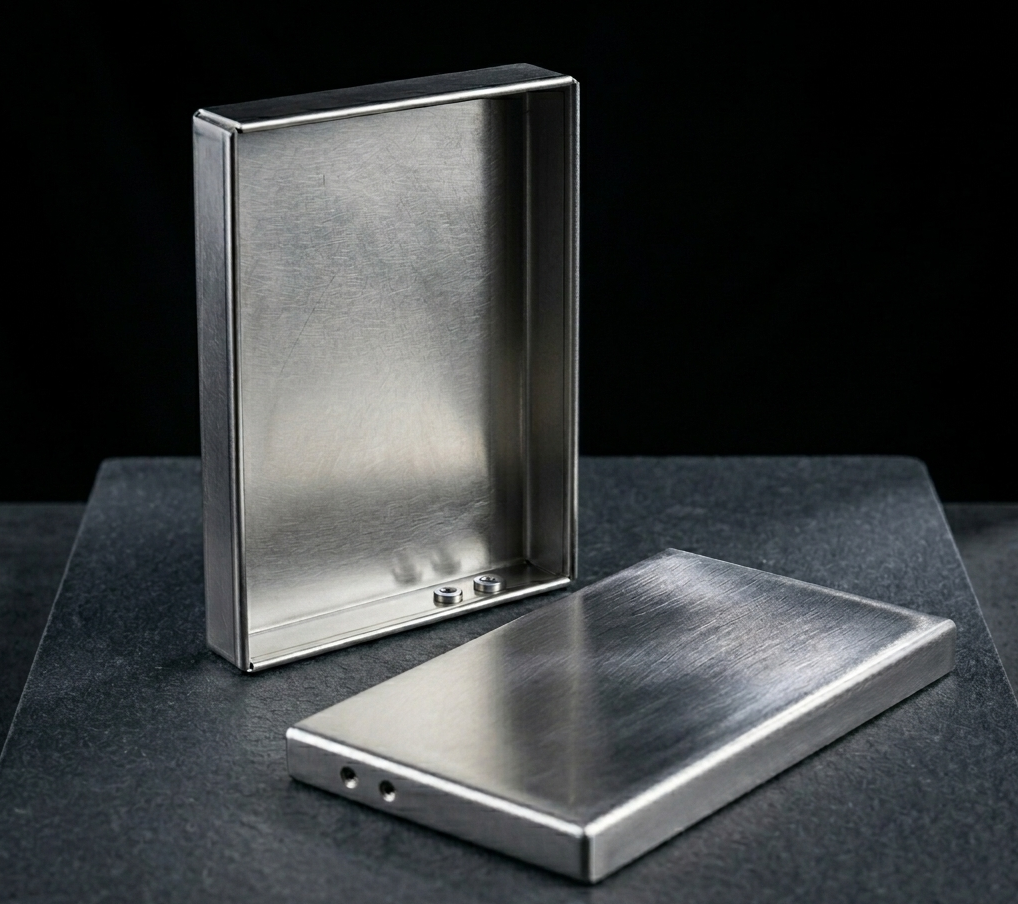
Nitric and citric acid passivation for stainless steel components, with verification testing available to specified requirements.
Stainless steel passivation is a chemical surface treatment that removes free iron and other contaminants introduced during machining, grinding, forming, fabrication, and handling. It supports the naturally forming chromium-rich oxide layer that gives stainless steel its corrosion resistance. Passivation is not a paint, plating, or added protective coating.
When Stainless Steel Needs Passivation
Stainless components are commonly passivated after machining or fabrication, after contact with carbon-steel tooling, or when handling and storage may have transferred ferrous contamination. Rust staining, unexpected surface discolouration, or a specification calling for verified free-iron removal can also indicate that passivation should be considered.
Nitric Acid and Citric Acid Passivation
Active Treatment provides both nitric acid and citric acid passivation in Singapore. The appropriate route depends on the stainless steel grade, the component condition, the applicable specification, and the required verification method.
Nitric Acid Passivation
Nitric acid is the traditional passivation method and is used across a broad range of stainless steel grades. Process selection must account for the alloy and any customer-specified standard or test requirement.
Citric Acid Passivation
Citric acid provides an alternative route for removing free iron. It is often selected for medical, food-processing, and pharmaceutical applications where lower toxicity and contamination control are important considerations.
Materials, Appearance and Dimensional Considerations
Active Treatment passivates 300-series and 400-series stainless steels as well as precipitation-hardening grades. Because the process targets surface contamination rather than depositing a coating, it produces no measurable dimensional build and is not intended to create a decorative finish. Alloy grade, surface condition, heat tint, scale, weld condition, embedded contamination, and mixed-material assemblies should be identified before processing so the correct route can be assessed.
Passivation Testing and Quality Requirements
Copper sulfate, water immersion, and high-humidity verification testing are available. Active Treatment supports passivation requirements associated with ASTM A967, AMS 2700, and ASTM A380. Customers should state the required specification, acceptance test, and documentation at quotation stage rather than assuming a default test method.
Passivation or Electropolishing?
Passivation is appropriate when the primary requirement is free-iron removal and restoration of the passive surface without intentional smoothing. When a component also needs reduced roughness, micro-burr reduction, or a bright finish, stainless steel electropolishing may be more suitable. For a directional cosmetic finish rather than a chemical treatment, compare hairline buffing and mechanical polishing.
What to Provide for a Passivation Quote
For an accurate quotation, provide the stainless steel grade, drawings or part dimensions, quantity, present surface condition, details of any welds or mixed-material assemblies, the required nitric or citric route if specified, the applicable standard and verification test, masking or handling restrictions, documentation needs, and the required delivery date.
Key Benefits
- Removes free iron and surface contamination
- Supports the chromium-rich passive surface
- Helps reduce corrosion initiation from ferrous contamination
- Nitric acid and citric acid process options
- No added coating or measurable dimensional build
- Verification testing available to specified requirements
Specifications
| Surface effect | No added coating or measurable dimensional build |
|---|---|
| Process options | Nitric acid, citric acid |
| Applicable alloys | 300-series, 400-series stainless, precipitation-hardening grades |
| Testing available | Copper sulfate, water immersion, high humidity |
| Standards supported | ASTM A967, AMS 2700, ASTM A380 |
Frequently Asked Questions
Why does stainless steel need passivation if it's already 'stainless'?
Machining, grinding, and handling introduce free iron particles and surface damage that compromise the natural passive layer. Without passivation, these contaminated areas can initiate rust and pitting corrosion — even on 316L stainless steel.
Is passivation a coating?
No. Passivation is a chemical treatment that removes free iron and supports the stainless steel's naturally forming passive surface. It does not add a painted, plated, or measurable coating layer.
What is the difference between nitric acid and citric acid passivation?
Nitric acid is the traditional method used across a broad range of stainless steel grades. Citric acid is an alternative often selected where lower toxicity and contamination control are important. The correct route depends on the alloy, part condition, specification, and required verification test.
Does passivation change the dimensions or appearance of my parts?
Passivation does not add a coating and produces no measurable dimensional build. It is not a polishing process, so the starting surface condition and visible machining or fabrication marks generally remain.
How do I know if my parts need passivation?
Passivation is commonly specified after machining, grinding, forming, or fabrication; after contact with carbon-steel tooling; or when ferrous contamination, rust staining, or a customer specification requires treatment and verification.
What passivation testing is available?
Copper sulfate, water immersion, and high-humidity verification testing are available. State the applicable standard and acceptance test when requesting a quote so the processing and documentation requirements can be reviewed.
Can you passivate assembled components?
Assemblies require review because dissimilar metals, trapped solution, inaccessible surfaces, and seals can affect process suitability. Provide a material list and assembly drawing so Active Treatment can assess the correct approach.
What information is needed for a passivation quote?
Provide the stainless steel grade, drawing or dimensions, quantity, current surface condition, weld or assembly details, required nitric or citric process, applicable standard and test method, masking restrictions, documentation needs, and delivery requirement.
Request a Quote
Contact Active Treatment Pte Ltd in Singapore for Passivation. Call +65 6352 9846 or email activetreatment88@yahoo.com.sg.