Sand Blasting
喷砂处理
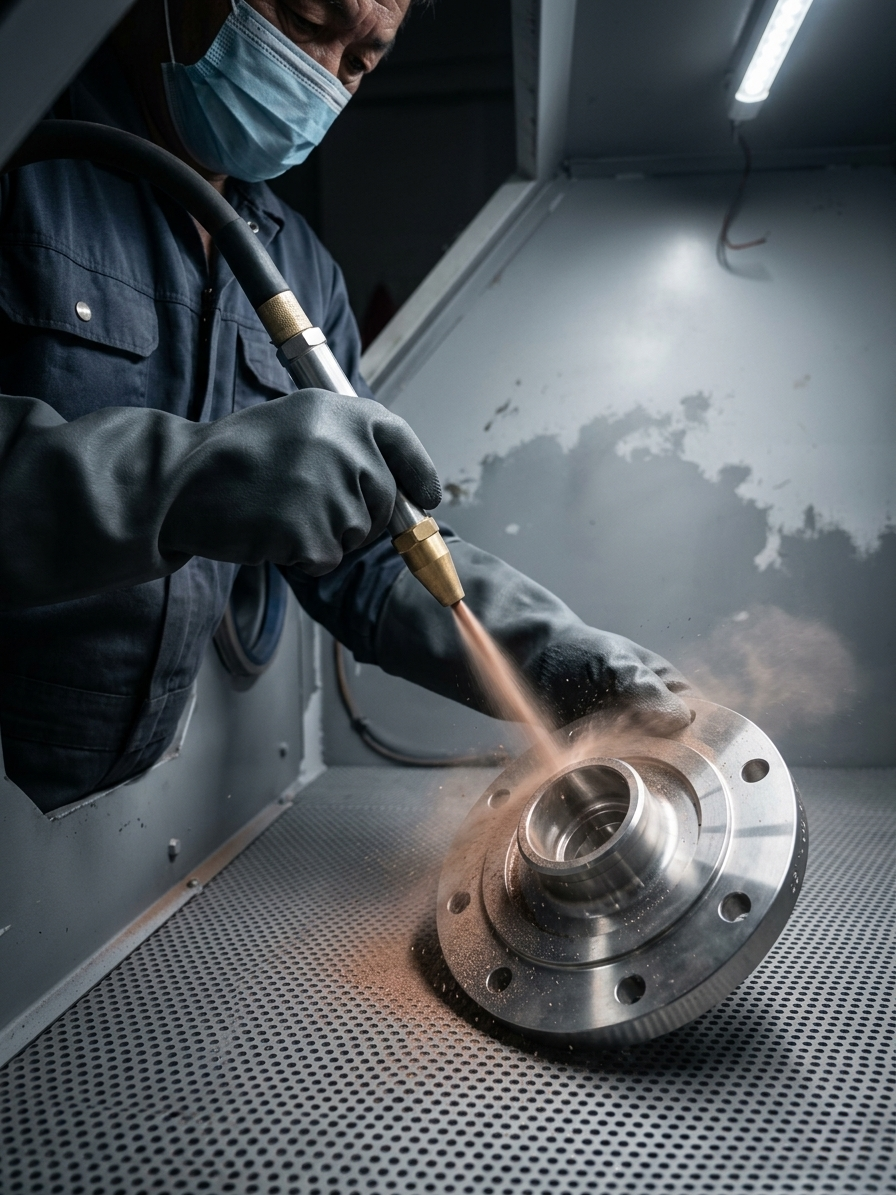
Precision abrasive blasting to create uniform matte textures and prepare surfaces for coating.
Sand blasting (abrasive blasting) uses a controlled stream of abrasive media propelled at high velocity to clean, texture, or prepare metal surfaces. At Active Treatment, we offer glass bead blasting, alumina grit blasting, and stainless steel shot blasting, each producing different surface finishes and textures.
The process is widely used to remove scale, rust, and old coatings, to create a uniform matte or satin texture for aesthetic purposes, and to provide an anchor profile that maximises adhesion for subsequent plating, painting, or powder coating.
We process components of all sizes — from small precision parts to large structural assemblies.
Key Benefits
- Creates consistent, reproducible surface textures
- Removes rust, scale, and old coatings efficiently
- Improves adhesion for subsequent coatings
- Wide choice of media for different finishes
- Can process large and complex components
Specifications
| Substrate | Steel, aluminium, stainless steel, copper alloys |
|---|---|
| Cabinet size | Up to 1000 × 600 × 500 mm |
| Achievable Ra | 0.8–6.3 µm depending on media and pressure |
| Media options | Glass bead, alumina grit (60–220 mesh), stainless steel shot |
Frequently Asked Questions
What media do you use for blasting?
We offer glass bead (for bright, uniform satin finishes), alumina grit (for aggressive cleaning and anchor profiles), and stainless steel shot (for peening and bright finishes on stainless). Please specify the required Ra finish or surface appearance.
Will blasting change the dimensions of my parts?
Grit blasting removes a very small amount of metal (<5 µm per side) from surface high points. For most applications this is insignificant. Peening (shot blasting) may slightly change thin sections; please advise if this is a concern.
Can you blast selectively (mask certain areas)?
Yes. We can mask threads, bearing surfaces, and other critical features using rubber plugs, tape, and custom fixtures before blasting. Please mark masking requirements clearly on your drawing.
How do I specify the blasted finish I need?
You can specify a target Sa/Ra value (e.g. Ra 1.6 µm), a visual standard (e.g. Sa 2.5 to ISO 8501), or describe the intended end use. We can provide sample plaques for visual approval before production runs.
How quickly after blasting should parts be coated?
Blasted surfaces are highly reactive and will begin to flash-rust in humid conditions within hours. We recommend processing blasted parts for plating, painting, or powder coating on the same day, or storing in a dry, clean environment with vapour phase inhibitor packaging.
Request a Quote
Contact Active Treatment Pte Ltd in Singapore for Sand Blasting. Call +65 6352 9846 or email activetreatment88@yahoo.com.sg.