Black Oxide
发黑处理
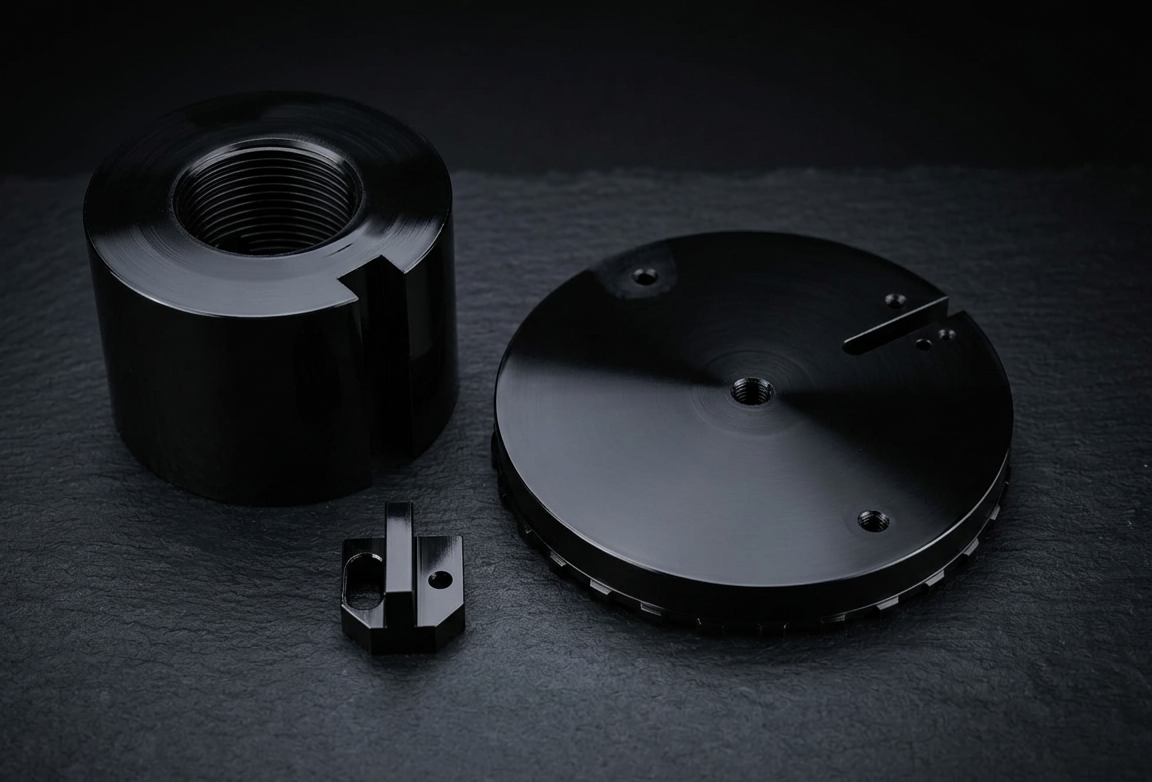
Chemical conversion coating that imparts a uniform black finish on steel with reduced light reflection.
Black oxide (also known as bluing, blackening, or gun bluing) is a chemical conversion coating applied to ferrous metals that creates a thin (1–2 µm), uniform black iron oxide layer. Unlike paints or powder coats, black oxide is integral to the metal surface and cannot chip or peel.
Active Treatment applies hot black oxide at 135–145°C using alkaline oxidising salts. Post-treatment oil or wax impregnation significantly improves corrosion resistance. The process is widely used for tools, fasteners, automotive components, firearms, and industrial equipment where a professional black finish is required.
Black oxide produces no significant dimensional change, making it safe for precision fits and threaded components.
Key Benefits
- Premium black aesthetic with no dimensional change
- Reduces light reflection significantly
- Oil/wax impregnation improves corrosion resistance
- Does not chip or peel like paint
- Cost-effective for high-volume runs
Specifications
| Standard | MIL-DTL-13924 Class 1 |
|---|---|
| Substrate | Carbon steel, alloy steel, cast iron, stainless (limited) |
| Layer thickness | 1–2 µm |
| Process temperature | 135–145°C |
| Corrosion resistance | Up to 72 hours NSS with oil sealer |
Frequently Asked Questions
How much corrosion protection does black oxide provide?
Black oxide alone provides minimal corrosion resistance. With a post-treatment oil or wax sealant, components achieve 72–200 hours of salt spray resistance. For outdoor or wet environments, we recommend zinc plating or phosphating over black oxide for better protection.
Does black oxide work on stainless steel?
Hot alkaline black oxide is primarily a steel process. Stainless steel can be blackened using alternative processes (e.g. black chrome or black electroless nickel) which we also offer. Please specify your substrate when enquiring.
Will black oxide affect threaded features or close tolerances?
No. At 1–2 µm thickness, black oxide has no measurable effect on thread fits, bore diameters, or surface flatness. It is one of the few finishing processes safe for precision assemblies.
Does the black oxide process cause hydrogen embrittlement?
The hot black oxide process operates at 135–145°C and does not involve acid pickling in the final stages, so hydrogen embrittlement risk is very low compared to electroplating processes. High-strength steels (>1400 MPa) should be de-embrittled after pre-plate acid cleaning if applicable.
What industries commonly use black oxide?
Black oxide is widely used for firearms components, cutting tools, fasteners, automotive engine parts, hand tools, and industrial equipment. The premium black appearance and non-reflective surface are valued in both functional and aesthetic applications.
Request a Quote
Contact Active Treatment Pte Ltd in Singapore for Black Oxide. Call +65 6352 9846 or email activetreatment88@yahoo.com.sg.